For Molly Holzschlag, 1963–2023
Sometime in 2020 — early pandemic, the world shutting down — I drove out to Saguaro National Park on the west side of Tucson for an event called "Web With Molly." It was organized by a woman named Molly Holzschlag, someone I'd connected with on Facebook over our shared history in web development. She'd announced it months in advance on her site, webwithmolly.com, framing it as a gathering for people who cared about the web — not the code, but the thing itself. "Using Our Tools for Acts of Good," she called it. Morning under a ramada in the Sonoran desert, hot beverages, conversation, humanity turned up to eleven and technology turned off.
A handful of people had said they'd come. Then fewer. Then none.
I showed up anyway. Sent a message on Facebook that I was there. She replied, apologized for being late, and arrived a little buzzed.
It was just the two of us.
I didn't know who Molly Holzschlag really was. Not then. I knew she'd spent time in California, that she was a strong advocate of web standards, that she could be abrasive and in-your-face and unapologetically herself on social media. To be honest, I wasn't sure she hadn't exaggerated some of her resume. I didn't care. I'd been living in Tucson for two years at that point, and in all that time I had not found a single person I could talk to about the world I'd come from. The few programming groups on Meetup were either defunct or locked behind the University of Arizona. Molly might have been the only person in my Facebook feed who understood what it meant to have built things on the web in the 1990s.
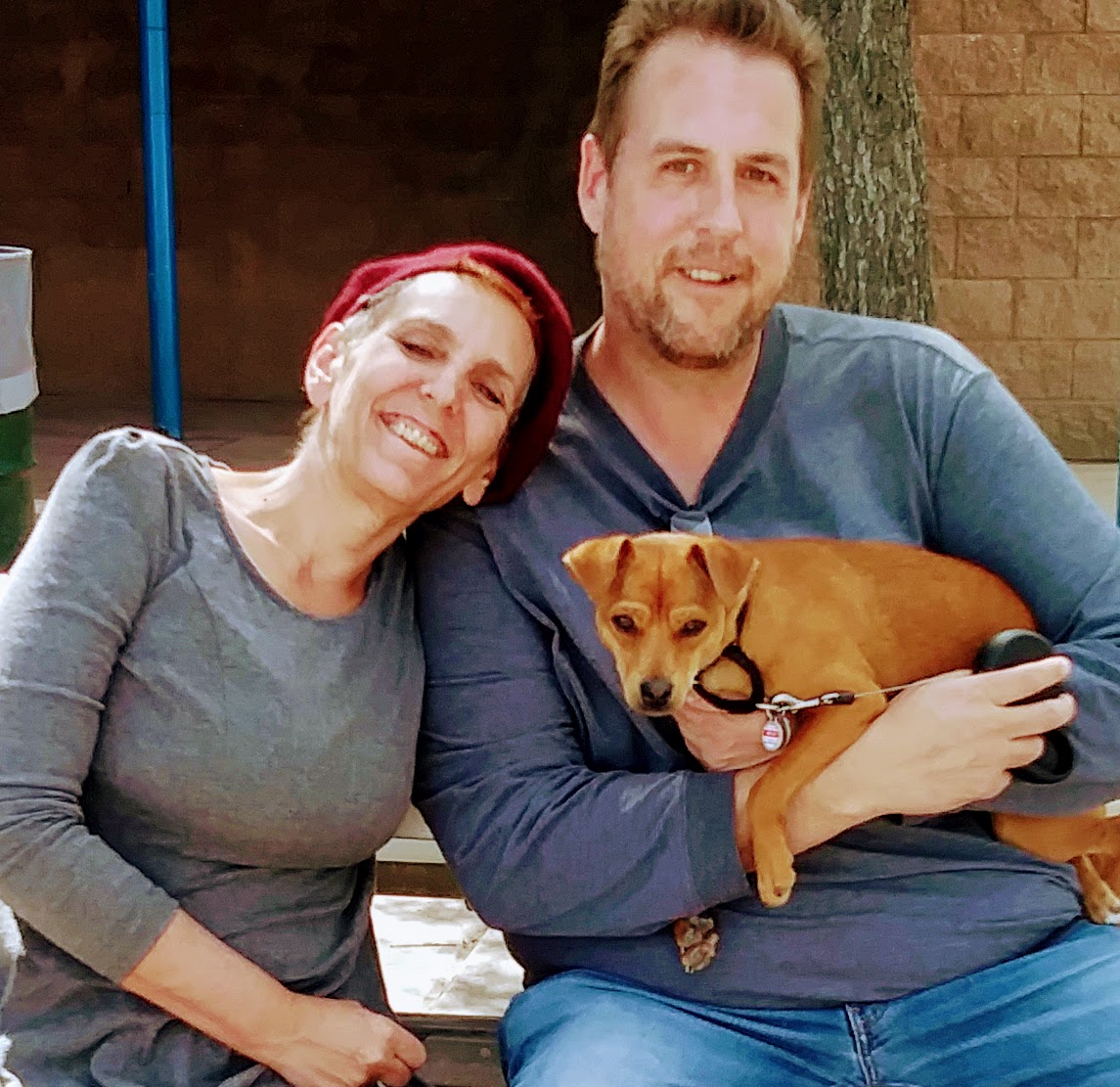
So I went. I brought my dog Riley, a little terrier mix I'd recently adopted from the pound. And for several hours on a bench in the Arizona desert, two strangers talked about everything.
Here is who Molly Holzschlag actually was.
She wrote or co-authored thirty-five books on web design and open standards. Thirty-five. She led the Web Standards Project, the coalition that pressured Microsoft, Opera, and Netscape into supporting the same standards so that the rest of us didn't have to write three versions of every website. She sat on the W3C's CSS Working Group as an invited expert. She created Open Web Camp, a free annual event in Silicon Valley. She received a U.S. Congressional Special Recognition for her technology contributions. Eric Meyer, one of the architects of CSS itself, called her "a force of nature." Jeffrey Zeldman, the godfather of web standards, called her the Fairy Godmother of the Web. She challenged Bill Gates to his face — twice — about Internet Explorer's refusal to comply with standards. And Gates listened.
She had a voice, people said, like a blues singer in a cabaret — brassy, smoky, full of hard-won joys.
She was also broke, sick, and dying.
Aplastic anemia, diagnosed in 2014. Her husband Raymond had already died. She'd raised over $70,000 through GoFundMe for chemotherapy. She'd had to sell her signature domain, molly.com — one of the original personal domains on the internet — to help pay for care. The woman who had stood in front of Bill Gates and told him his browser was broken couldn't afford her own medical bills.
By the time I met her, she was living in Tucson, teaching webmaster courses at Pima Community College and the University of Arizona. She had survived longer than her doctors expected, and she knew it.
What I remember most about that afternoon isn't any single thing she said. It's the recognition.
We were both humanities people who had fallen into the web sideways. She came from linguistics, communications, social justice. I came from journalism and communication studies — rhetoric, philosophy, critical theory, the Frankfurt School. Neither of us had computer science degrees. We'd both understood the web not as a technical problem to be solved but as a cultural phenomenon to be shaped.
We talked about designing layouts with HTML tables and single-pixel transparent GIFs — the absurd duct-tape-and-bailing-wire era that somehow became the foundation of everything. We laughed about it. We talked about Heidegger and the question concerning technology, about what it means when a tool stops being a tool and starts reshaping the people who use it. We talked about our educations, our backgrounds, how we'd ended up in a field that didn't have a name when we entered it.
It was like two veterans comparing notes from the same war. Not the glamorous retelling — the version you only share with someone who was actually there.
Molly held firm to her beliefs through everything. Health crises, the death of her husband, financial ruin — none of it shook her conviction that the web should be open, accessible, and built for people. She had been fighting that fight since before most of today's developers were born, and she never stopped.
She was hopeful that molly.com might be worth something significant in her estate, that it could fund the work she cared about after she was gone. Both of us knew a thing or two about domain names and their unpredictable value. I've had domains save me financially more than once, a sale materializing just when I needed it, like the universe throwing a lifeline. She was counting on something similar. I don't know if it ever came through for her the way she hoped.
We also talked about things you might not expect two strangers to discuss — end-of-life planning, DNR orders, the bureaucratic maze of the healthcare system. But Molly had outlived her prognosis. She'd already beaten the odds just by being alive the day we met. And I was carrying my own weight. There's a kind of honesty that becomes possible when two people have stopped pretending things are fine. We weren't pretending.
After that day, we kept in touch. Facebook messages, the occasional late-night phone call. Less about technology by then, and more about navigating life — a decent doctor, a program that actually helps, the small intelligence of survival that people in difficult circumstances trade like currency.
But life has a way of pulling people under. We both had our own battles, and over time we drifted — not out of any falling out, but the way people do when they're drowning in their own separate oceans. The conversations got less frequent, the gaps longer.
And then one day I noticed she hadn't posted anything in a while.
Molly Holzschlag was found dead at her home in Tucson on September 5, 2023. She was sixty years old.
I've been thinking about why I needed to write this.
It's not because Molly needs me to tell her story. She has a Wikipedia page. She has tributes from Eric Meyer and Jeffrey Zeldman and dozens of people who knew her better and longer than I did. Jason Grigsby, who barely knew her either, wrote that she made everyone feel like they were someone. That's true. I felt it on that bench in the desert.
But none of those people were at that ramada. None of them saw the Molly who organized an event and nobody came. None of them were on the other end of those late-night calls.
I think part of why I'm writing this is selfish. I'm fifty-six years old. I've been building things on the web for thirty years. I moved to Tucson in 2018 when my life was falling apart, and I met Molly when both our lives were falling apart, and now she's gone and I'm still here, and I'm trying to make sense of what that means.
Last year I went to Silicon Valley for the first time since 2008. Back then, LAMP was new, virtualization was just getting started, Facebook was exploding — they even tried to recruit me. I remember them saying they liked that I wasn't just a developer but someone with an entrepreneurial spirit. That was a different era, a different me.
Going back last March was like visiting a place you lived in as a child. The geography is the same, but everything else has changed. The web Molly and I built our lives around — the one she spent her career defending — has been swallowed by something bigger. AI is doing to the web what the web did to print. The question of who controls it, who benefits from it, whether it will be open or captured, is playing out right now. It's the same fight Molly was having with Bill Gates twenty years ago, just at a different scale.
I'm in the middle of that fight now, in my own way. Building tools, writing about what AI means for the people who actually use the web. Trying, at fifty-six, with an ADHD diagnosis that explains thirty years of almost-but-not-quite, to put myself in the right place around the right people at the right time. It's what Molly was trying to do with her event at Saguaro. Reach out. Find your people. Hope someone shows up.
Molly Holzschlag wrote her purpose statement on webwithmolly.com in early 2020, before I met her:
"Even if your hips and back hurt like hell, your beard is turning grey, your hair is disappearing altogether, you're hungover or 'YES to all' — it is purpose which helps to guide and shape the quality of our lives."
That's the most Molly thing I've ever read. Honest, funny, a little bruised, and absolutely unwilling to let pain be the last word.
I was the only one who showed up that day. I wish more of us had. I wish I'd stayed closer, called more, been better. But I showed up. And I'm still showing up.
This is my record that she was here.
Molly Miriam Esther Holzschlag January 25, 1963 — September 5, 2023 The Fairy Godmother of the Web